
Skip to main content

Surface Water Transfer Video Series

When moving high volumes of water through hoses or pipe, hidden hazards emerge. Pressure, confined surfaces, ice hazards and stored energy are just a few of the risks. These conditions can lead to serious injury or equipment failure if not controlled. The short modules help crews recognise these risks and lead safer operations. energysafetycanada.com
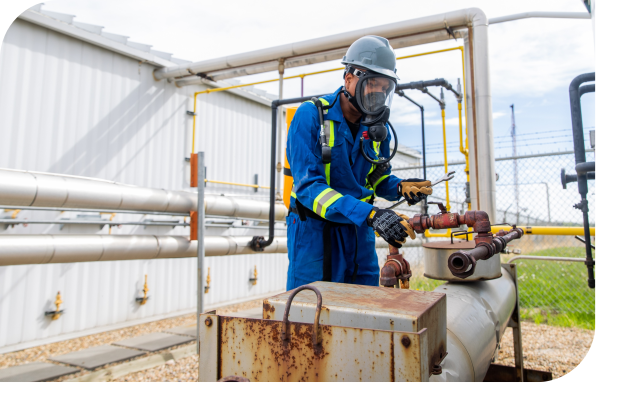
Each video is around 4.5 to 7 minutes long to suit tailgate talks or pre-task briefings. energysafetycanada.com

The series includes:

  • Module 1: Pumps & Pressures — explains how pumping systems store and release energy.

  • Module 2: Heaters — details hazards in bulk water heaters and the risks of scaled back / frozen systems.

  • Module 3: Pigging Operations — highlights line clearing using pressurised air or pigs and the major hazards involved.

  • Module 4: Deployment & Pick-Up Operations — addresses risks when deploying or retrieving lines and equipment.

  • Module 5: Water Body & Ice Operations — covers large-scale hazards like ice breaking, water body access and fatalities that stem from these environments.

  • Module 6: Water Storage Devices — shows how large storage units present hazards if inadequately planned or maintained.


Each module is paired with facilitation-questions and prompts for crew discussion.

How to Use It

Group.svg

Watch a module during a team meeting or tailgate briefing.

Icon (3).svg

Use the discussion prompts to reflect on the work you’re about to do and the conditions you’ll face.

Icon (1).svg

Ask the crews: What could go wrong if we ignore this hazard? What control are we relying on? What will we do if things change mid-job?

Make this a routine before any transfer, hose run, pigging or ice-work operation.

Resource Listing

Short video modules to help crews identify and control hazards in large-volume water transfer operations. Ideal for onboarding, toolbox talks or pre-task briefings.

Video Series

Get the full set of modules and discussion materials to support safe surface-water transfer work.

Access the Video Series

Share: